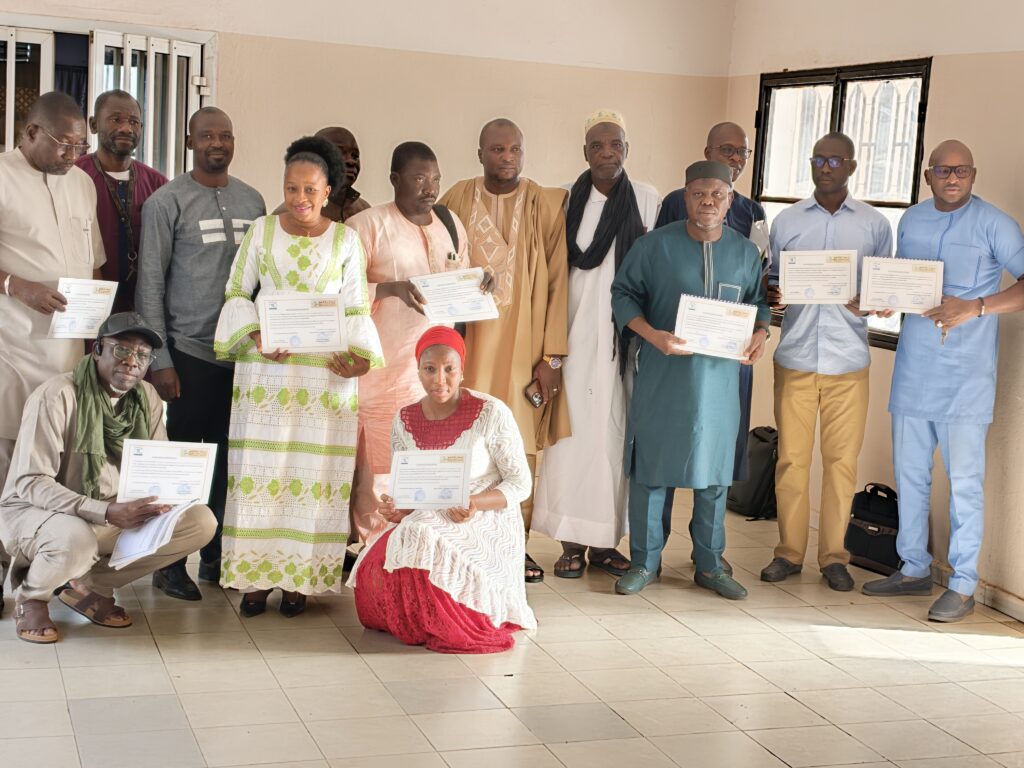

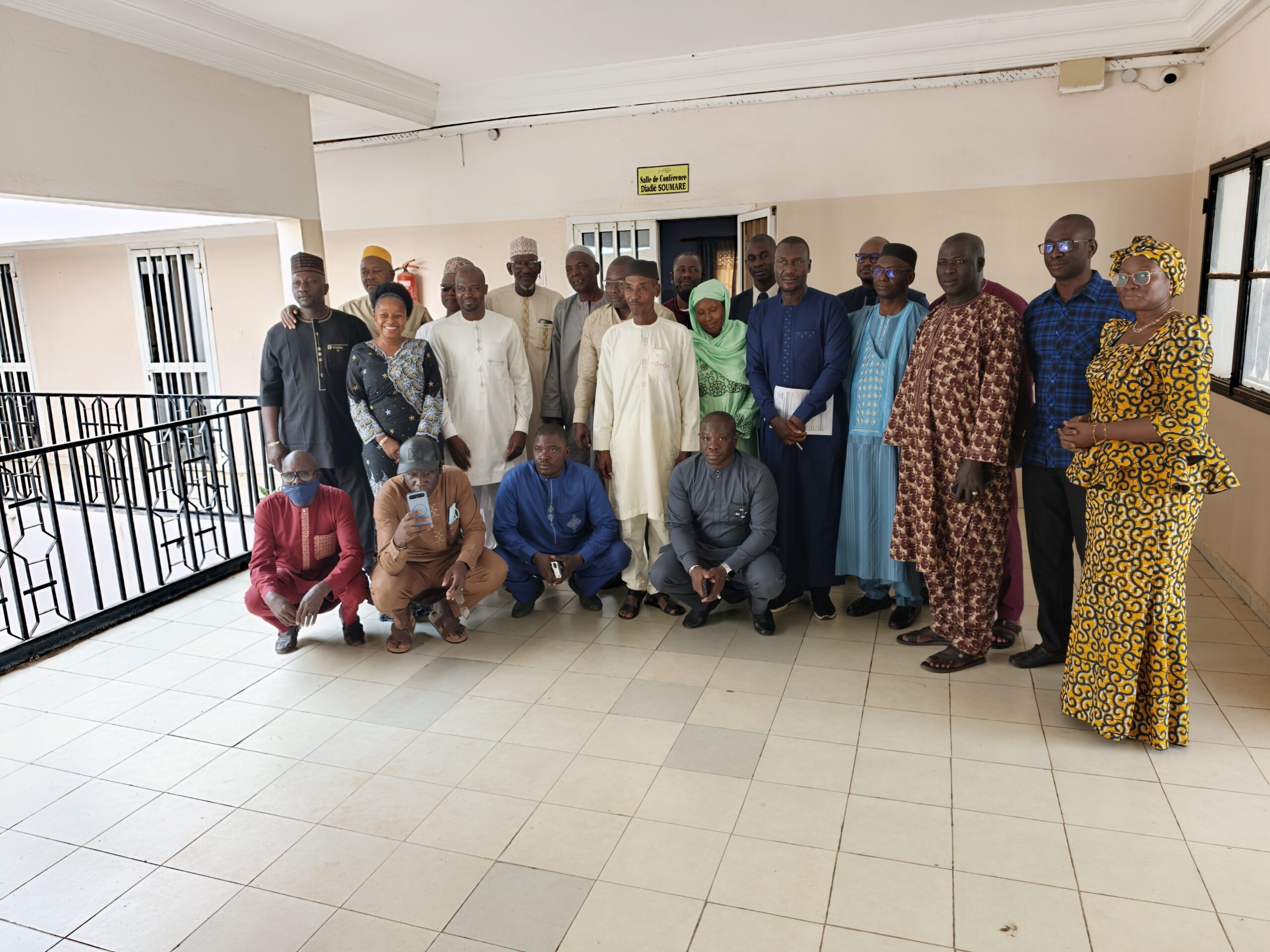
From 02 to 06 November, the Kayes Regional Council hosted a training workshop on monitoring and evaluation of the Regional Plan for Vocational and Technical Training for Employment (SDRFPTE).
Organized as part of the FIER II project, the meeting brought together 30 elected representatives and technicians around a simple question: how do we know whether training really leads to employment?
The session aims to strengthen the capacity of elected officials, and Regional Council Technician, staff of the Regional Coordination Unit FIERII in Kayes, partner training centres and staff of the DREFP in the monitoring and evaluation, planning and steering of regional vocational and technical training policies.
Two interventions marked the opening ceremony:
The first intervention was that of the coordinator of the UCR who, after welcoming the auditors, located the training workshop in its context and gave a brief overview of the activities of the FIERII project.
The second intervention was that ofand Vice-President of the Kayes Regional Council, who, in his speech, urged participants to be more diligent in ensuring better ownership of monitoring and evaluation tools and more effective regional governance of vocational training schemes for youth inclusion and entrepreneurship.
Work then focused on the presentation of objectives; expectations, standards of conduct and the training programme followed by a pre-test to assess the initial level of participants.
The Regional Master Plan for Technical Vocational Training and Employment sets out the region's guidelines for vocational and technical training. But a diagram, however well designed, only produces effects if it is monitored, measured and corrected along the way. It is this pilot capacity that the workshop wanted to strengthen among those who implement it on a daily basis.
From logical framework to matrix of responsibilities
The participants first reviewed the basic concepts of monitoring and evaluation and the framework for the DFSDS. They then worked on very practical tools.
The logical framework, first, which links the intended ambition, evidence of achievement and points of vigilance. A concrete example served as a guide: activities (selection, training, internship, signing of agreements), products (four planned mobile training sessions, four completed), a result (eighty certified people) and an impact, sustainable integration.
Participants also learned to formulate SMART objectives, i.e. specific, measurable, achievable, realistic and time-bound. They learned how to build an operational chronogram from targeting beneficiaries to monitoring their integration, mobile training, internships and mentoring. The matrix of responsibilities (RACI) allowed them to clarify who is achieving, who is valid, who is consulted and who is informed to avoid duplication.
A sector-based approach
The exercises focused on two key sectors for the regional economy: agri-food and construction. The sector-by-sector approach, which follows the entire training chain to employment, has been favoured. The trainers also stressed the principle of inclusive prioritization: to target interventions while ensuring the inclusion of the most vulnerable audiences.
Future commitments
After the group work and the plenary renditions, the participants made recommendations,
- Review the frequency of the sessions of the Regional Framework for Joint Management of Vocational Training and Employment
- Establishment of a database on vocational training
- Apply training received
- Vulgarising the regional master plan for vocational training among stakeholders
- Strengthening the capacities of elected and technical representatives of the Kayes Regional Council and technical services
For the Kayes Regional Council, the challenge now is to put these tools into practice in order to report on the results of the scheme and to adjust actions in favour of young people and businesses in the region.