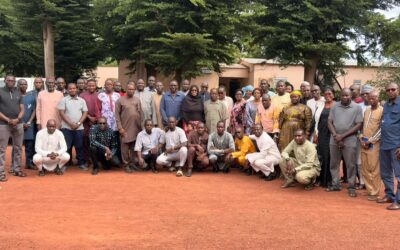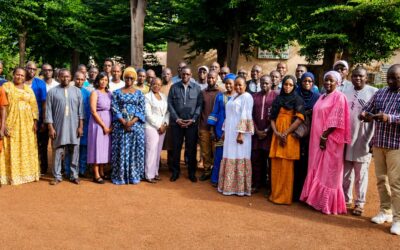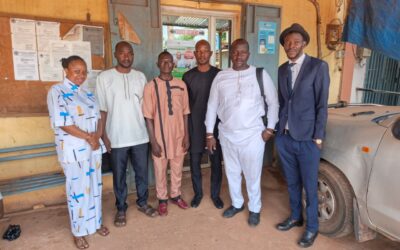
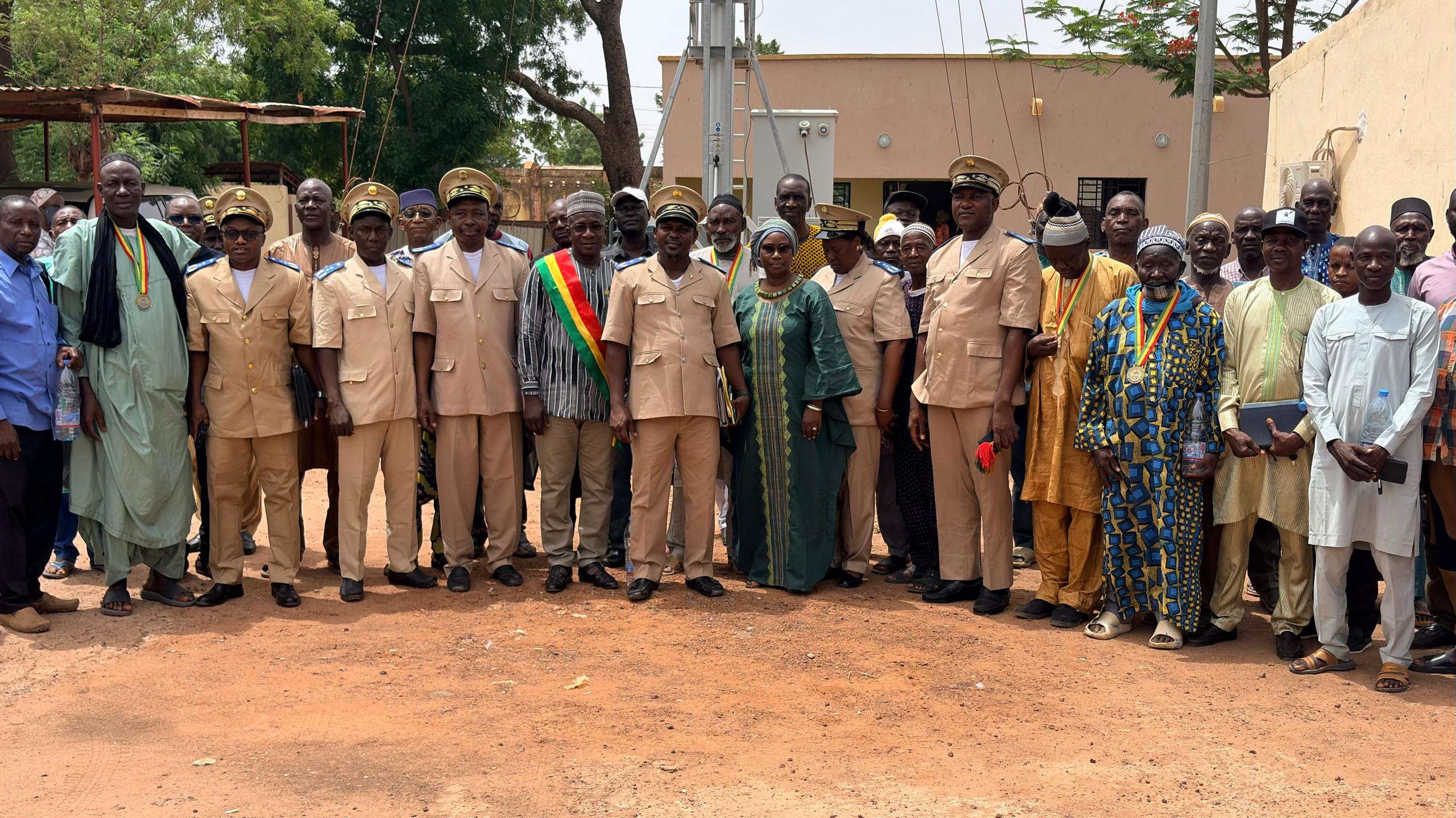
Participatory workshops in Bougouni, Sikasso and Koutiala brought together authorities and actors from the sectors to validate future areas of agricultural, pastoral and fish farming investment.
Regional mobilization for rural youth
Between 12 and 18 May 2026, Project FIER II organized three regional site validation workshops in agricultural, animal and fish production areas. These meetings, held successively in Bougouni (12-13 May), Sikasso (14-15 May) and Koutiala (18-19 May), brought together an exceptional audience of actors: prefects of circles, mayors, village authorities, regional directors of technical services, representatives of chambers of trades and delegates of peasant organizations.
Each opening ceremony was chaired by the representative of the Governor of the Region, who set the tone by highlighting the two strategic issues of these workshops: « Validating potential manageable sites not only means choosing land, but ensuring that investments will be sustainable, inclusive and environmentally friendly. »
Bougouni: a moment of gathering before the works
The Bougouni workshop started in a climate of gravity and solemnity. Before the beginning of the work, the assembly observed a minute of silence in memory of General Sadio Camara, thus demonstrating the strong link between the national commitment and the dynamics of rural development carried by FIER II.
The deliberations then brought together the prefects of nine circles – Bougouni, Garalo, Fakola, Kadiana, Kolondiéba, Koumantou, Ouelessebougou, Selingué and Yanfolila – as well as their mayors and customary authorities. At the end of two days of work, 35 sites were validated in the region: 5 rice farms, 13 marketers, 12 for cork and 5 fish farms.
Sikasso: Southern capital confirms agricultural leadership
The Sikasso region, an agricultural attic in Mali, hosted the second workshop on 14 and 15 May 2026. The prefects of six circles – Sikasso, Niena, Klela, Kadiolo, Kignan and Loulouni – participated alongside the mayors, regional directors and representatives of the sectors concerned. The opening ceremony benefited from special media coverage provided by the ORTM, in addition to two local radio stations and a web TV. At the end of the discussions, 24 sites were selected for the region: 2 rice, 9 market gardeners, 9 cork and 4 fish. Each validated site will undergo prior technical, environmental and social studies in accordance with IFAD's requirements.
Koutiala : The cotton basin commits
Closing the regional tour, the Koutiala workshop was held on 18 May 2026. The six circles of the region – Koutiala, Kounikana, Zangasso, M的pessoba, Molobala and Yorosso – were represented by their administrative and customary authorities. In his opening speech, the Governor's representative stressed the need to curb the rural exodus by creating inclusive economic development hubs at the heart of the countryside.
The Koutiala survey proved to be particularly ambitious, with 29 validated sites: 5 rice, 14 marketers, 9 cork and 1 fish farm – demonstrating the exceptional productive potential of this basin.
Transparency, rigour and inclusion: the key words of the process
The methodology chosen by the project ensures the legitimacy and sustainability of the choices made. Each validated site was subjected to a multi-criteria analysis grid covering the availability of water resources, land security, market accessibility, technical feasibility and social inclusion – young men and women aged 18 to 40, but also persons with disabilities.
At the end of each workshop, the administrative and customary authorities signed prior consent minutes, formalizing their commitment to grant validated sites to young project promoters identified by FIER II. These documents provide the legal basis for the technical, environmental and social studies to be launched in the coming weeks.
The next steps
The regional validation reports, accompanied by signed consent documents, will be finalized by the Regional Coordination Unit (RCU) within one week of each workshop. These deliverables will be the formal mandate for launching feasibility studies at each of the 88 sites selected.
The implementation of the projects is part of a gradual path, in line with the project's operational plan until 2030. For every young entrepreneur installed on a site, FIER II provides full support: vocational training, access to adapted financial services and connection to marketing networks.
These workshops thus mark a decisive step in the realization of the project's vision: making production basins in southern Mali a territory of resilience, employment and prosperity for Malian rural youth.