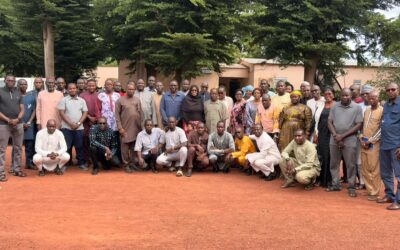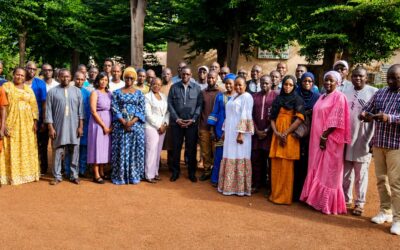
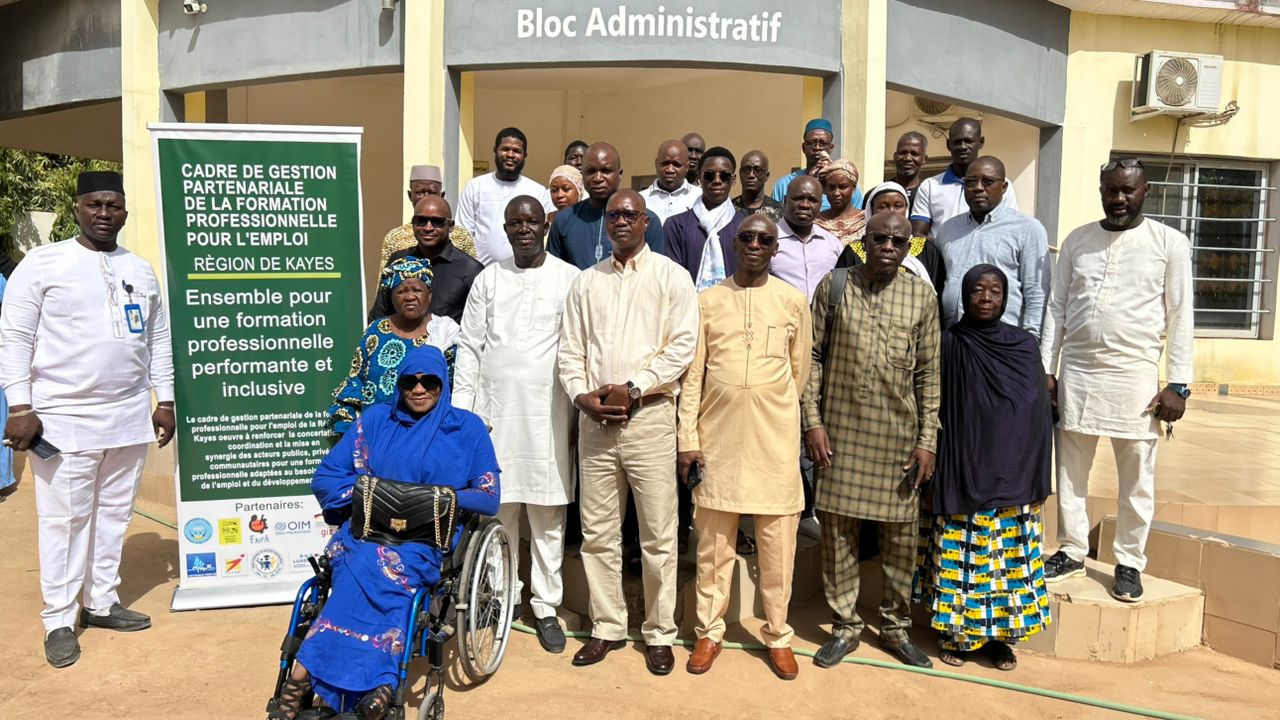
Held in Kayes on 19 May 2026 of the second session of the Regional Framework for Partnership Management of Vocational Training for Employment.
Within the framework of the territorial governance of vocational training, the promotion of employment and entrepreneurship of rural young people, the ELHAJ Oumar Samba DIALLO meeting room of the Kayes Regional Council hosted the second session of the Regional Framework for Partnerial Management of Vocational Training for Employment. Opportunities for all regional vocational training actors to discuss the issues, objectives and future prospects of vocational training in the region.
Placed under the chairmanship of thend Vice-President of the Kayes Regional Council, the meeting reflects the political will shown by the authorities to place vocational training at the heart of territorial development, by better articulating public action, the expertise of training centres and the needs of enterprises.
At the same time, the chair of the meeting wished to extend a warm welcome to each participant and to welcome the quality of the engagement of regional actors on participatory, inclusive and strategic approaches.
The President said that: « The fact that Project FIER II has taken over this session demonstrates once again its commitment with local authorities to develop local skills and the empowerment of young people. He will add that « The Kayes region is currently facing structural challenges in vocational training, including:
The mismatch between training provision and labour market needs;
youth mobility,
lack of employability,
lack of territorial competitiveness,
Lack of local entrepreneurship,
and the limited exploitation of agricultural, craft and industrial potential.
As a framework for dialogue and consultation in favour of better governance, inclusive vocational training for youth employment, CRPG plays a key role in monitoring, coherence of action and synergy between the various actors involved in regional development.
For Project FIER II, the holding of such a meeting is part of achieving the objectives of the first component, namely: « Making the institutional and socio-economic environment conducive to promoting entrepreneurship and employment for rural youth »
The session allowed participants to share their analysis, make recommendations and reaffirm their commitment to the effective and participatory implementation of the project.
For example, the session recommends to all stakeholders invited to invest in order to create the conditions for inclusive growth, based on human capital, innovation and the exploitation of know-how, so that vocational training for young people is a springboard for the integration and employability of young people in the Kayes region.
The President, in his address, welcomed the contribution and active participation of Project FIER II, which is a major lever to offer rural youth new opportunities and contribute to the sustainable development of the Kayes Region.