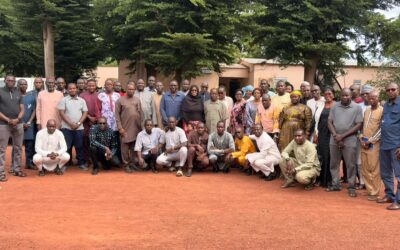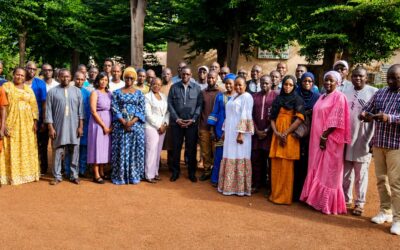
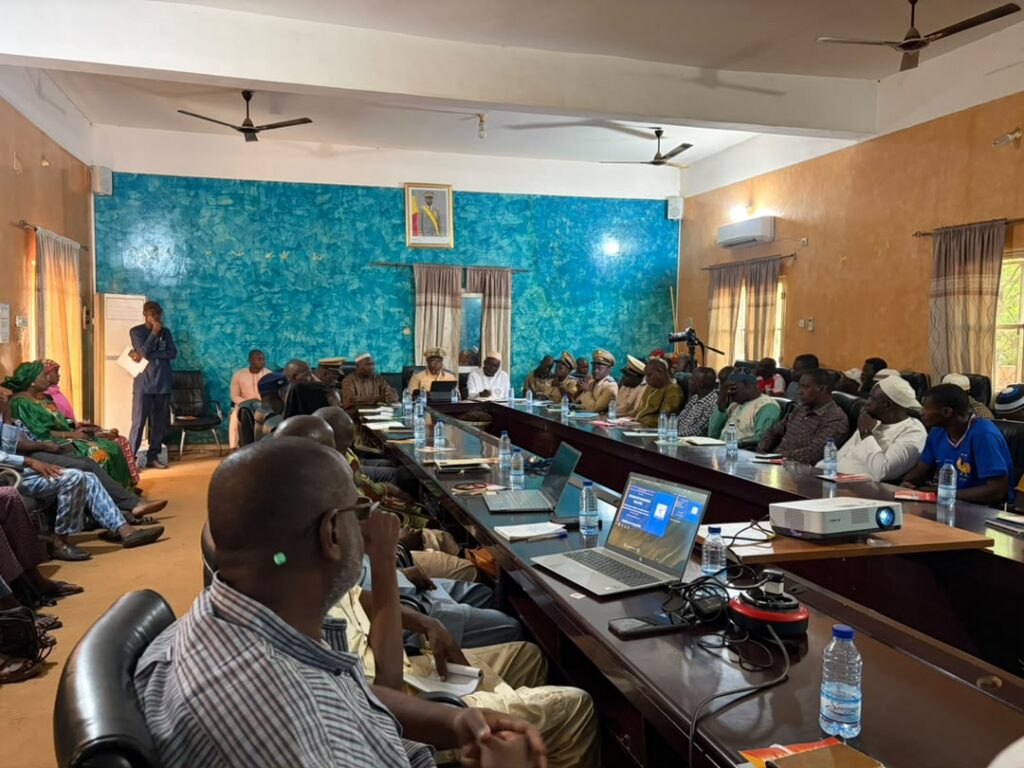
Koulikoro hosted the validation workshop of potential development sites for the vocational integration of rural youth. The purpose of the meeting was to obtain the consent of local authorities and administrative authorities to make these spaces available to FIER II. At the end of the meeting, 18 sites were validated. They are intended for agriculture (11 for maraching and rice farming), animal (3 for cork), aquaculture (3 for fish farming) and handicraft (1 centre).
The selection of these sites followed a study of the identification of production basins conducted by the Directorate-General for Rural Engineering through its regional dismemberments under the FIER II project. The process involved local authorities, administration across governorates of regions, local technical services, representatives of peasant organizations and professional agricultural chambers.
The selected sites are made available to the project, which has the task of developing them to install young rural people in the agricultural and non-agricultural sectors. The objective is their economic integration in order to contribute to the reduction of poverty in rural areas through the promotion of entrepreneurship and rural entrepreneurship in line with the development objective of FIER II.
Communities at large welcome this initiative by the Government of Mali and its partner, the International Fund for Agricultural Development (IFAD). To this end, the second vice-president of the Kulikoro Regional Council, Adaman Fomba, stressed that the establishment of infrastructure for the benefit of rural young people meets one of the needs of the Plan for Social and Cultural Economic Development – DPSEC- 2023-2027 of the Kulikoro Regional Council, i.e. the strengthening of employability and vocational integration of young people. This should support poverty reduction and resilience building. He urged the meeting to make an appropriate choice. He commended the authorities and IFAD and appreciated the participatory approach adopted by the project, which he said guaranteed the success of the company and its ownership by the people.
The Councillor for Administrative, Economic and Financial Affairs (CAEF) of the governor of the Koulikoro region, Mr Sagaba Samaké, presided over the opening ceremony of the workshop abounded in the same direction. He indicated that the mobilization around the site identification operation demonstrates the region's interest in employment issues, as the integration of young people is of concern to both authorities and communities. For him, productive infrastructure for young people is a factor for stability and development. It constitutes a structural investment aimed at improving sustainable production in agricultural and non-agricultural value chains. Mr CAEF recommended objectivity and relevance in the construction of the infrastructure to meet the requirements in order to optimize their impact on the population.
Participants from three circles in the Koulikoro region: Kangaba, Banamba and Kolokani reaffirmed the availability of the pre-selected sites, their commitment to work closely with the project and commended the efforts of the government through FIER II for the opportunity offered to the various localities and their involvement in the process.