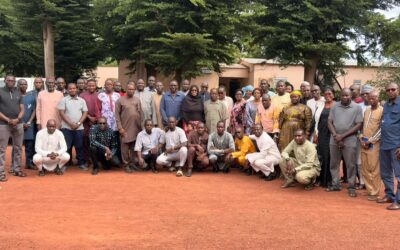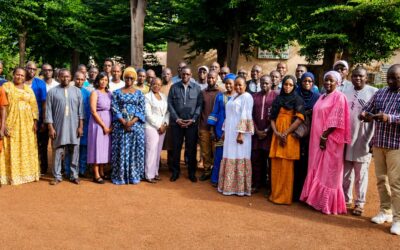
In Kadiolo, Kolondièba and Yorosso, FIER II accompanies 643 young people — 345 women — in the agricultural and livestock sectors of the Sikasso region.
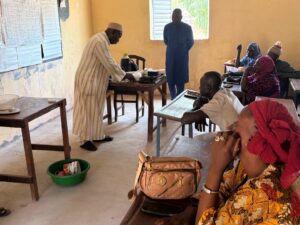
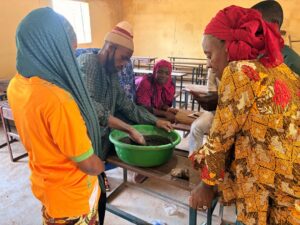
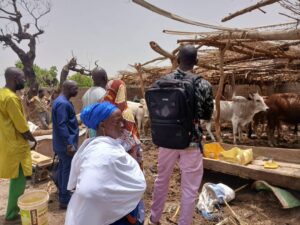
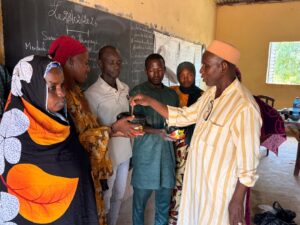
In classrooms transformed into learning spaces, young rural people discover new agricultural and zootechnical techniques. These courses, organised in partnership with the National Directorate of Agriculture and the National Directorate of Animal Production and Industries, are a key step before access to funding for their projects.
A journey towards economic autonomy
Launched jointly by the Government of Mali and the International Fund for Agricultural Development (IFAD), the FIER II project aims to promote rural entrepreneurship and facilitate the economic integration of young people in agricultural value chains. After an evaluation carried out in January 2025 in the former Sikasso region, 706 young people awaiting funding accepted the terms of the project. Of these, 614 were updated and validated by a regional selection committee in September 2025.
In this context, two memoranda were signed with DNA and DNPIA, paving the way for training sessions on grain production techniques, beef, sheepmeat and goatmeat throughout the Sikasso region.
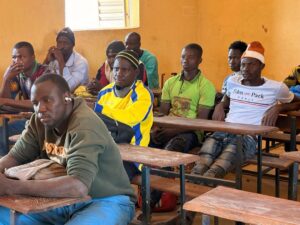
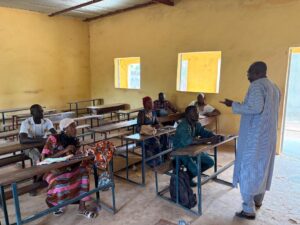
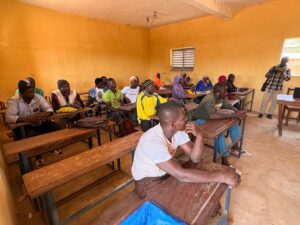
Training rooted in the reality of the field
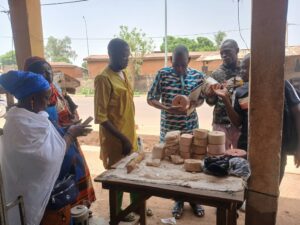
The sessions take place directly in the localities of the beneficiaries, promoting participatory pedagogy. The DNA and DNPIA facilitators combine theoretical presentations and practical exercises: calculation of feed rations for livestock, preparation of salt blocks and complementary foods, manipulation of agricultural inputs. Beneficiaries touch, experiment, ask questions.
“ The training is not limited to the classroom: a visit to an experienced producer allows learners to see livestock practices in real-life conditions, to understand the challenges of daily management of a herd and to identify points of improvement in their own practices.
The sectors covered
| FILE / METIER | PARTNER | YOUNG PEOPLE |
| DIRECTORATE-GENERAL FOR AGRICULTURE (DNA) — 237 YOUNG PEOPLE | ||
| Marketing of cereals | DNA | 116 |
| Agricultural production techniques (maize, rice, peanut, ginger) | 55 | |
| Processing of agricultural products | 31 | |
| Marketing | 22 | |
| Manufacture of agricultural equipment | 10 | |
| Arboriculture | 2 | |
| Restoration | 1 | |
| DIRECTORATE-GENERAL FOR ANIMAL PRODUCTIONS AND INDUSTRIES (DNPIA) — 406 YOUNG PEOPLE | ||
| Sheep and goats | DNPIA | 253 |
| Bovine pack | 151 | |
| Livestock | 2 | |
| Grand total | 643 | |
A rigorous monitoring mission
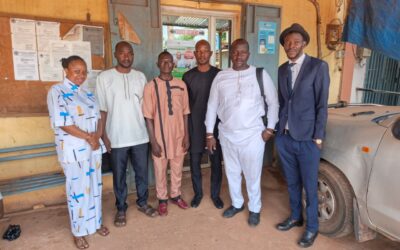
From 14 to 19 April 2026, a multidisciplinary team of the Regional Coordination Unit (UCR) in Sikasso, accompanied by executives from the Regional Directorates of Employment and Vocational Training (DREP) and the Regional Council, travelled the circles of Kadiolo, Kolondièba and Yorosso to ensure the smooth running of the training courses.
This follow-up mission was used to verify the presence of trainers and beneficiaries, to assess the pedagogical quality of interventions, to gather feedback from participants and to provide feedback and guidance to the facilitation teams in real time. The methodology adopted — participatory, iterative and youth-centred — facilitated frank and constructive exchanges among all stakeholders.
« These trainings allow us to approach our activity with more method. You learn how to calculate costs, choose the right inputs, plan. It's no longer improvisation. » — A beneficiary, Kolondièba circle
Towards financing and sustainable integration
These capacity-building sessions are the last step before the release of funding under the FIER II project. By equipping young people with the necessary technical and entrepreneurial skills, the project ensures the long-term viability of micro-enterprises that will be created or developed.
Training is not an end in itself: it prepares beneficiaries to manage effectively the resources entrusted to them, to reduce the risk of losses and to maximize their income in sectors with high potential for the Sikasso region.
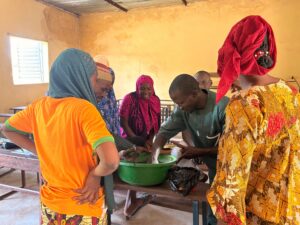
What this training prepares
▸ Access to financing of business plans validated by the Regional Selection Committee
▸ Controlling production techniques to reduce risks and increase yields
▸ Building the confidence of young people in their entrepreneurial capacities
▸ Strengthening the links between the project, the technical services of the State and the beneficiaries
▸ Economic inclusion of rural women, representing 54% of the trained.